
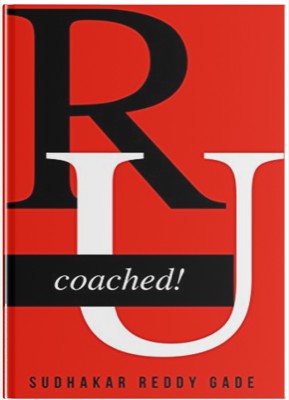
R U Coached!
The case for executive coaching as a defining leadership act. Why the leaders who hire a coach early outperform the ones who wait — and why coaching is not therapy, not mentoring, not friendship.
Three things this book gives a leader who has been resisting coaching.
Coaching is not therapy. It is not mentoring. It is not friendship.
Why the three lookalikes are not coaching, and what coaching does that none of them can. The chapter draws the lines clearly so a leader can stop using the wrong instrument for the wrong job.
The cost of waiting.
Three case studies — leaders who hired a coach early, and leaders who waited until they were already in trouble. The numerical difference between the two paths over a five-year arc is the heart of the chapter.
Six diagnostic questions to ask before signing.
Choosing a coach is the most consequential decision a leader will make about their own development — and the one most often made on intuition alone. The book closes with the six questions that separate a coach who will work for you from one who will not.
Why the leaders who hire a coach early always do better.
Most senior leaders hire a coach the first time when something is already breaking — a stalled promotion, a deteriorating team, a confidence that has quietly leaked out of the room. The book opens with that observation and asks why. The answer is not lack of access. Coaching has been available to senior Indian leaders for fifteen years. The answer is the way coaching is sold — as remediation, as a fix for what is wrong. The leaders who use coaching only as repair pay the highest price for it, because they are using a long instrument to do short emergency work.
The leaders who hire a coach before the breaking point have a different experience. They use coaching the way a senior athlete uses a coach — as a slow accumulating instrument. They surface the small misalignments that would have compounded into the big stalls. They redesign the calendar before the calendar redesigns them. They learn to take the kind of feedback that no peer or report can give without political cost. The book documents three of these arcs in full, with names changed and outcomes left unchanged.
Coaching done early is cheaper than coaching done late. The book ends with the math — actual rupee numbers across promotion timing, retention, compensation, and post-engagement effectiveness scores. The case is uncomfortable. It says coaching is not a perk you earn after the title. It is a discipline you adopt before the title comes — and the title arrives faster because of the discipline.
Six leaders. Six different kinds of recognition.
I waited eight years to hire a coach. Reading this, I understood what those eight years had cost me. The book is gentle about it. The numbers in the back are not.
A clean, sober book that tells the truth about coaching without selling it. I have made it required reading for my CHRO team.
The chapter on lookalikes — therapy, mentoring, friendship — is the cleanest articulation of what coaching is and is not that I have read in fifteen years of practice.
I gave this to my son when he stepped into his first leadership role. He read it in three nights and came back with better questions than I had at his age.
Sudhakar's first book is the one I lend most often. It survives the lending, which is the highest praise a working coach's book can receive.
If you are wondering whether you need a coach, this book will end the wondering inside two chapters. It earned my engagement before I had finished it.
Endorsements anonymised by sector and seniority at request of readers. Named blurbs published with permission as they land.